

Understanding Mahjong: A Cultural and Gaming Phenomenon
Mahjong, a game deeply rooted in Asian culture, has captivated players around the world with its intricate rules and rich historical background. Originally developed in China during the Qing Dynasty, this game has transcended cultural boundaries, becoming a beloved pastime in various regions. With the advent of online platforms like NNN.BET Oficial Slots Brasil #1, Mahjong has experienced a resurgence, particularly in regions like Brazil where traditional and modern gaming intersect.
The Historical Origins of Mahjong
The exact origins of Mahjong remain somewhat ambiguous, with various theories suggesting its development between the mid-1800s and early 1900s. Some scholars believe Mahjong evolved from a mix of several ancient Chinese games, while others propose that it might have been influenced by Western card games introduced during the time. However, what remains clear is Mahjong’s deep connection to Chinese culture, often regarded as a symbol of leisure and intellectual challenge.
The game was initially played by the upper echelons of society, with the first sets handcrafted from bamboo and ivory. Mahjong's popularity grew during the Republican era in China, eventually spreading beyond its borders. By the early 20th century, Mahjong had made its way to Japan, Southeast Asia, and Western countries, taking on various regional adaptations.
The Structure and Rules of Mahjong
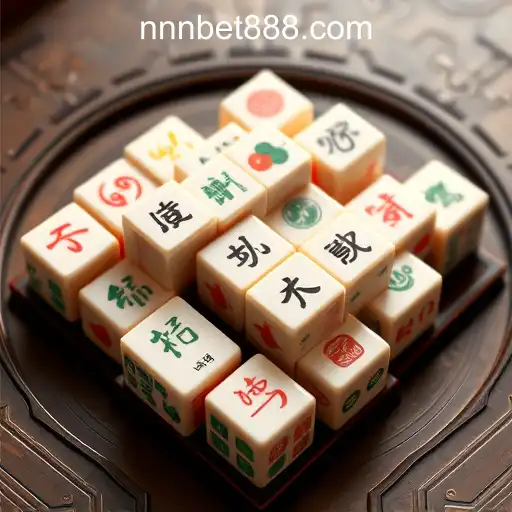
A typical Mahjong set comprises 144 tiles based on Chinese characters and symbols, although variations with more or fewer tiles exist. The primary components include suits like bamboos, dots, characters, honors, and bonus tiles. The essence of the game revolves around drawing and discarding tiles to form specific combinations, such as sets and pairs, to achieve a winning hand.
While the rules can be complex and differ across regions, the fundamental gameplay mechanics of Mahjong focus on strategy, memory, and calculation. Each player aims to complete a legal hand by collecting compatible tiles, simulating strategic maneuvers akin to Western card games like poker and rummy.
Mahjong in the Modern Era
In contemporary times, platforms like NNN.BET Oficial Slots Brasil #1 have brought Mahjong to the digital realm, enabling players globally to experience this classic game without geographical constraints. These online adaptations blend traditional elements with modern features, such as interactive designs, multiplayer modes, and cultural themes, appealing to both veteran players and newcomers.
Moreover, the rise of digital Mahjong has mirrored advancements in technology, making the game more accessible across different devices. This technological shift has significantly contributed to Mahjong’s growing popularity in non-Asian countries, including Brazil, where it intertwines with the vibrant gaming culture.
The Cultural Impact of Mahjong
Mahjong holds a special place in cultural contexts, often seen as a symbol of family and social gatherings. In many Asian households, Mahjong tables are a staple during festive occasions, echoing a sense of camaraderie and tradition. This cultural significance has permeated through literature, films, and music, reinforcing its status as a cultural icon.
In Brazil, the fusion of Mahjong with local traditions has added another layer of appreciation for the game. It is not just seen as a pastime but as a bridge connecting different cultures, offering insights into the rich history and evolving nature of Mahjong.
Conclusion: Mahjong's Enduring Appeal
Mahjong’s journey from an exclusive game of the Chinese elite to a global phenomenon illustrates its adaptability and timeless charm. Despite the digital wave, the core essence of Mahjong—combining intellect, strategy, and social interaction—remains unchanged. Platforms like NNN.BET Oficial Slots Brasil #1 play a pivotal role in preserving this heritage, ensuring that Mahjong continues to captivate and inspire players worldwide.